Time in art is not merely a backdrop for events nor a neutral medium in which a narrative unfolds. It is a substance, a structure, and a symbol that artists have explored, deconstructed, and reinterpreted over decades. In contemporary art, time takes the form of both linear narratives and loops, repetitions, erosion, or sudden ruptures. Its materiality and immateriality become subjects of artistic speculation, and time itself turns into a tool for examining memory, ephemerality, and the processual nature of existence.
TIME AS MEDIUM AND PROCESS
In conceptual and performative art, time becomes a medium in its own right. Marina Abramović, through her long-duration performances, tests the limits of time perception, forcing the viewer to co-participate in duration—to experience fatigue, tension, and the inevitability of change. In The Artist Is Present (2010), time was reduced to an intense yet extended moment: the gaze shared by the artist and the viewer, continuously sustained in silence.
The processual nature of time was also explored by Roman Opałka, who in his monumental cycle Opałka 1965/1–∞ rigorously and almost ascetically recorded successive numbers, creating a mathematical inscription of his own passing. As time progressed, his paintings gradually lost contrast- the white of the numbers merged with the white of the background until it was meant to absorb everything, becoming a metaphor for disappearance.
The processual nature of time was also explored by Roman Opałka, who in his monumental cycle Opałka 1965/1–∞ rigorously and almost ascetically recorded successive numbers, creating a mathematical inscription of his own passing. As time progressed, his paintings gradually lost contrast- the white of the numbers merged with the white of the background until it was meant to absorb everything, becoming a metaphor for disappearance.
MEMORY AND THE ARCHIVING OF TIME
Contemporary art also confronts the notion of memory and the archiving of time. Christian Boltanski creates installations composed of traces of the past-photographs, personal objects, documents. His works remind us of the fragility of human existence, emphasizing that archiving is both an attempt to stop time and an acknowledgment of its transience.
Similar tensions between memory and forgetting are explored by Doris Salcedo, whose installations- such as Shibboleth, the crack in the floor of Tate Modern- record historical wounds embedded in the very structure of space. Here, time manifests as the physical presence of the past within the present.
Similar tensions between memory and forgetting are explored by Doris Salcedo, whose installations- such as Shibboleth, the crack in the floor of Tate Modern- record historical wounds embedded in the very structure of space. Here, time manifests as the physical presence of the past within the present.
TIME AS DECONSTRUCTION AND SIMULATION
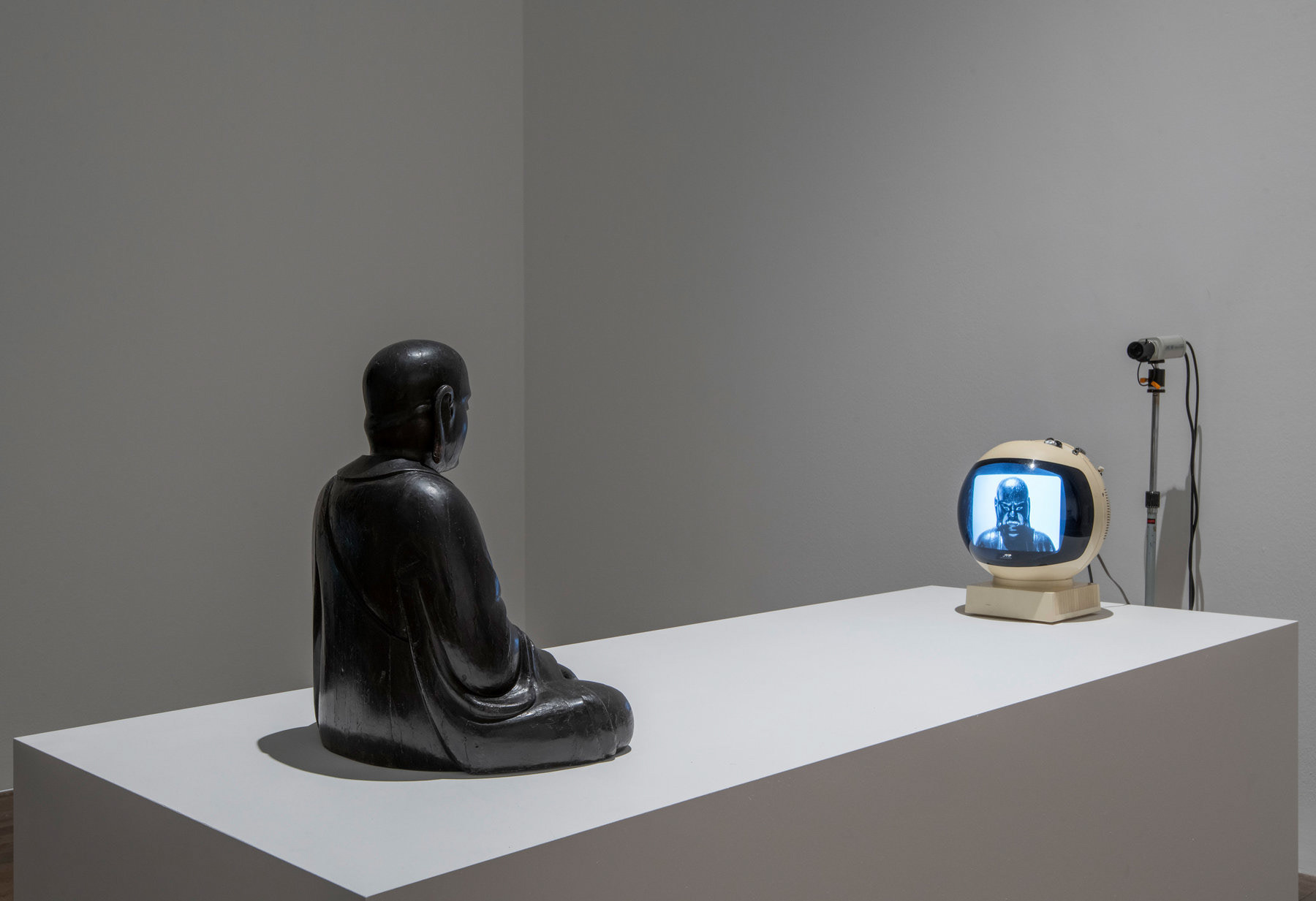
In the digital era, time has been fragmented- recorded, looped, and recombined. Video art and new media practices, such as the works of Bill Viola or Nam June Paik, deconstruct time through manipulations of image speed, simultaneous narratives, and the registration of impossible temporal sequences.
In her film essays, Hito Steyerl examines how technology reshapes our perception of time, how images become “low resolution” both literally and metaphorically, losing their materiality in favor of digital fluidity. Her work shows that in the age of simulation, time is no longer a stable dimension but a virtual code that can be edited, multiplied, and reconstructed.
In her film essays, Hito Steyerl examines how technology reshapes our perception of time, how images become “low resolution” both literally and metaphorically, losing their materiality in favor of digital fluidity. Her work shows that in the age of simulation, time is no longer a stable dimension but a virtual code that can be edited, multiplied, and reconstructed.
TIME AS RITUAL AND REPETITION
Many artists employ time in a ritualistic way. In the art of Anselm Kiefer, time reveals itself through the stratification of matter, his paintings are processes in which pigments, ash, lead, and organic substances accumulated over decades continually change, yielding to the influence of time. In the work of Tehching Hsieh, time becomes an extreme experience: the artist spent one year without entering enclosed spaces, another without sleeping, testing the limits of human existence through time as an existential discipline.
THE ESSENCE OF TIME IN CONTEMPORARY ART
In contemporary art, time is no longer merely a narrative device. It becomes an object of analysis, challenge, and reconstruction. Artists investigate it in its many manifestations: as a linear record, as ephemeral duration, as a structure of memory and technological processing. In an era of digital archives and an extended present, time remains one of the most vital themes in art-elusive yet omnipresent, embedded in materiality while simultaneously detached from it.
In this way, contemporary art does not merely represent time but actively shapes it and redefining our understanding of the past, the present, and the future.
In this way, contemporary art does not merely represent time but actively shapes it and redefining our understanding of the past, the present, and the future.
(POLISH VERSION)
Czas w sztuce nie jest jedynie tłem dla wydarzeń ani neutralnym medium, w którym rozgrywa się narracja. Jest substancją, strukturą i symbolem, który artyści na przestrzeni dekad eksplorowali, dekonstruowali i reinterpretowali. W sztuce współczesnej czas przyjmuje formy zarówno linearnych narracji, jak i pętli, powtórzeń, erozji czy nagłych zerwań. Jego materialność i niematerialność są przedmiotem artystycznych spekulacji, a sam czas staje się narzędziem, które pozwala badać pamięć, efemeryczność oraz procesualność istnienia.
Czas jako medium i proces
W sztuce konceptualnej i performatywnej czas staje się medium samym w sobie. Marina Abramović w swoich długotrwałych performansach testuje granice percepcji czasu, zmuszając widza do współuczestnictwa w trwaniu – doświadczania zmęczenia, napięcia i nieuchronności zmiany. W „The Artist is Present” (2010) czas został sprowadzony do intensywnego, ale jednocześnie rozciągniętego momentu – spojrzenia artystki i widza, które nieustannie trwało w milczeniu.
Procesualność czasu badał również Roman Opałka, który w swoim monumentalnym cyklu „Opałka 1965/1-∞” w sposób rygorystyczny i niemal ascetyczny zapisywał kolejne liczby, tworząc matematyczny zapis własnego przemijania. Wraz z upływem czasu jego obrazy stopniowo traciły kontrast – biel liczb zlewała się z bielą tła, aż wreszcie miała pochłonąć całość, stając się metaforą zanikania.
Pamięć i archiwizacja czasu
Sztuka współczesna mierzy się również z pojęciem pamięci i archiwizacji czasu. Christian Boltanski tworzy instalacje będące zbiorami śladów przeszłości – fotografii, przedmiotów osobistych, dokumentów. Jego prace przypominają o nietrwałości ludzkiej egzystencji, podkreślając, że archiwizacja jest jednocześnie próbą zatrzymania czasu i aktem świadomości jego ulotności.
Te same napięcia między pamięcią a zapomnieniem eksploruje Doris Salcedo, której instalacje, takie jak „Shibboleth” – pęknięcie w posadzce Tate Modern – są zapisem historycznych ran, ukrytych w strukturze samej przestrzeni. W tym przypadku czas objawia się jako fizyczna obecność przeszłości w teraźniejszości.
Czas jako dekonstrukcja i symulacja
W erze cyfrowej czas został rozbity na fragmenty, rejestrowany, zapętlany i rekombinowany. Video art i sztuka nowych mediów, jak prace Billa Violi czy Nam June Paika, dekonstruują czas poprzez manipulacje prędkością obrazu, symultaniczne narracje i rejestracje niemożliwych sekwencji czasowych.
Hito Steyerl w swoich esejach filmowych bada, jak technologia zmienia naszą percepcję czasu, jak obrazy stają się „low resolution” – w sensie dosłownym i metaforycznym, tracąc swoją materialność na rzecz cyfrowej płynności. Jej prace pokazują, że w epoce symulacji czas nie jest już stabilnym wymiarem, lecz wirtualnym kodem, który można edytować, zwielokrotniać i rekonstruować.
Czas jako rytuał i powtórzenie
Wielu artystów wykorzystuje czas w sposób rytualny. W sztuce Anselma Kiefera czas objawia się w warstwowości materii – jego obrazy są procesem, gdzie gromadzone przez dekady pigmenty, popiół, ołów i organiczne substancje nieustannie się zmieniają, poddając się wpływowi czasu. W twórczości Tehchinga Hsieha czas jest ekstremalnym doświadczeniem – artysta przez rok nie wchodził do pomieszczeń, przez kolejny nie spał, badając granice ludzkiej egzystencji w kontekście czasu jako egzystencjalnego rygoru.
Istota czasu w sztuce współczesnej
Czas w sztuce współczesnej nie jest już jedynie sposobem narracji, ale staje się obiektem analizy, podważania i rekonstrukcji. Artyści badają go w jego rozmaitych przejawach: jako liniowy zapis, jako efemeryczne trwanie, jako strukturę pamięci i technologicznego przetworzenia. W dobie cyfrowych archiwów i rozciągniętej teraźniejszości czas pozostaje jednym z najważniejszych tematów sztuki – nieuchwytny, ale wszechobecny, zanurzony w materialności i równocześnie od niej oderwany.
W ten sposób sztuka współczesna nie tylko przedstawia czas, ale aktywnie go kształtuje – redefiniując nasze rozumienie przeszłości, teraźniejszości i przyszłości.